
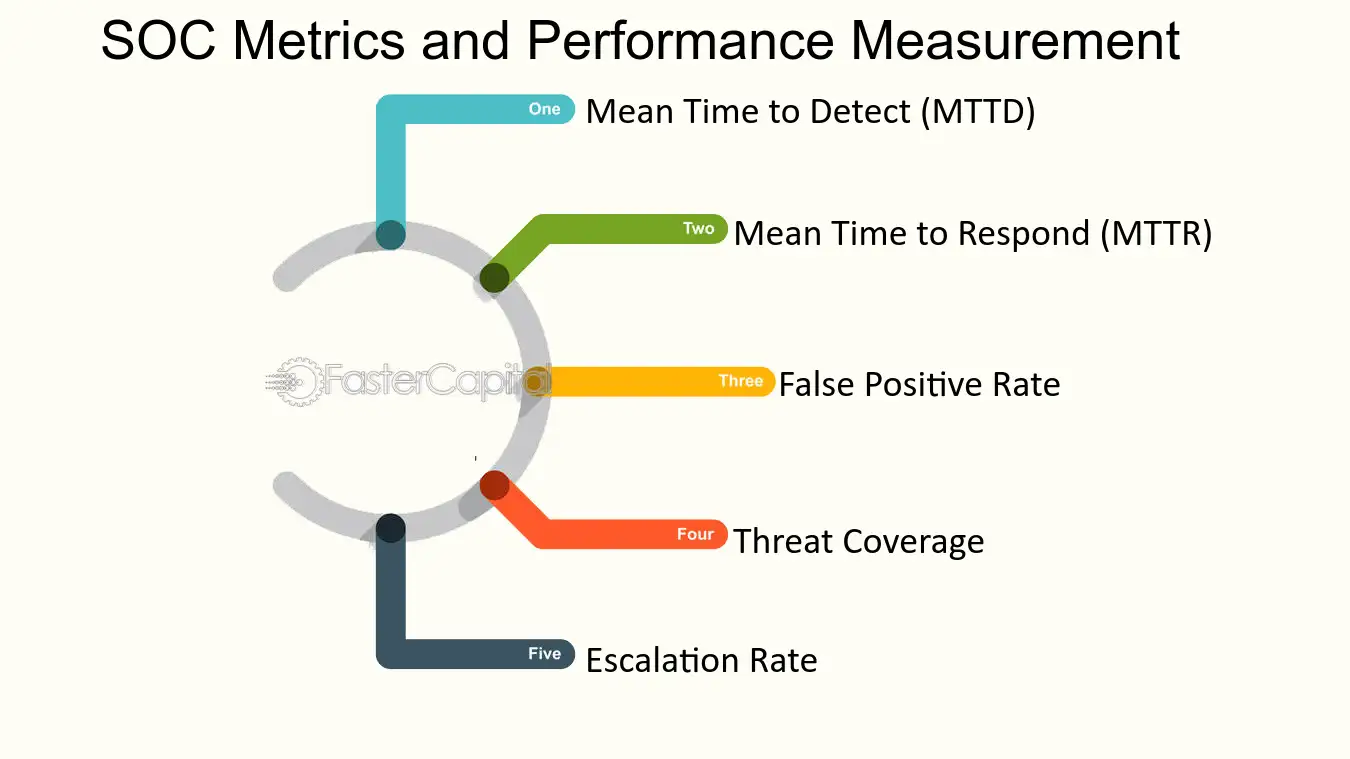
In Part 7, we examined real-world incident response case studies and key lessons learned. Now, in Part 8, we’ll focus on how to measure the effectiveness of a Cyber Security Operations Center (CSOC) using Key Performance Indicators (KPIs) and metrics.
An effective CSOC isn't just about detecting threats—it must also demonstrate efficiency, accuracy, and continuous improvement. Measuring the right KPIs helps organizations evaluate their SOC maturity, response capabilities, and overall security posture.
1. Why CSOC Metrics & KPIs Matter
KPIs help CSOC teams:
✅ Assess the efficiency of threat detection and response.
✅ Identify bottlenecks in security operations.
✅ Improve SOC processes and automation.
✅ Justify budget and resource allocation to leadership.
Without measurable KPIs, it’s difficult to determine whether the CSOC is improving or struggling.
2. Key CSOC Metrics & KPIs
CSOC performance is measured across different categories, including threat detection, response time, threat intelligence, and operational efficiency.
🔹 Detection & Monitoring Metrics
These metrics assess how well the CSOC detects and analyzes threats.
📌 Mean Time to Detect (MTTD)
✔ Definition: The average time it takes for the CSOC to detect a security incident.
✔ Formula:
✔ Goal: Reduce MTTD by improving SIEM rules, EDR analytics, and threat hunting capabilities.
📌 False Positive Rate
✔ Definition: The percentage of alerts that turn out to be false positives.
✔ Formula:
✔ Goal: Reduce false positives through better rule tuning and behavioral analytics.
📌 Alert Fatigue Index
✔ Definition: Measures how many alerts analysts investigate daily.
✔ Formula:
✔ Goal: Reduce analyst fatigue through SOAR automation and AI-driven filtering.
🔹 Incident Response & Containment Metrics
These KPIs evaluate how fast and effectively the CSOC responds to incidents.
📌 Mean Time to Respond (MTTR)
✔ Definition: The average time it takes to contain, mitigate, and resolve an incident.
✔ Formula:
✔ Goal: Reduce MTTR by improving incident response automation and SOAR integration.
📌 Containment Time
✔ Definition: The time taken to isolate an infected system or stop an attack after detection.
✔ Goal: Minimize containment time by deploying EDR auto-response actions (e.g., auto-isolation of compromised endpoints).
📌 Remediation Success Rate
✔ Definition: The percentage of incidents fully remediated after containment.
✔ Formula:
✔ Goal: Maintain a high success rate by improving forensic analysis and recovery processes.
🔹 Threat Intelligence & Proactive Hunting Metrics
These metrics assess how well the CSOC anticipates and mitigates threats before they cause damage.
📌 Threat Hunting Effectiveness
✔ Definition: Measures how many undetected threats were found during proactive threat hunting.
✔ Formula:
✔ Goal: Increase effectiveness by improving hunting methodologies and intelligence integration.
📌 Threat Intelligence Utilization Rate
✔ Definition: Measures how often IoCs and TI feeds contribute to real-world threat detection.
✔ Formula:
✔ Goal: Maximize TI integration with SIEM, EDR, and SOAR tools.
📌 Dwell Time
✔ Definition: The time a threat actor remains undetected inside the network.
✔ Formula:
✔ Goal: Reduce dwell time by enhancing threat hunting and real-time monitoring.
🔹 CSOC Operational Efficiency Metrics
These KPIs help measure the productivity and effectiveness of SOC analysts.
📌 Analyst Productivity Rate
✔ Definition: Measures how many alerts/incidents an analyst handles per shift.
✔ Formula:
✔ Goal: Maintain high efficiency without analyst burnout by leveraging automation.
📌 SOC Automation Efficiency
✔ Definition: Measures how many incidents are resolved using automated playbooks (SOAR) instead of manual investigation.
✔ Formula:
✔ Goal: Increase automation to free up analysts for higher-value tasks (e.g., threat hunting).
📌 SOC Maturity Level
✔ Definition: Assesses how advanced the CSOC is based on frameworks like NIST, MITRE ATT&CK, and SOC-CMM.
✔ Goal: Move from reactive SOC (Level 1) to a proactive SOC (Level 3+) through continuous improvement.
3. How to Improve CSOC Performance Using Metrics
🔹 Optimize SIEM & SOAR Automation – Reduce alert fatigue and MTTR.
🔹 Enhance Threat Intelligence Integration – Improve detection accuracy using real-time TI feeds.
🔹 Train Analysts & Automate Low-Level Tasks – Focus SOC resources on advanced investigations.
🔹 Conduct Regular SOC Maturity Assessments – Improve processes based on KPI insights.
🔹 Test Incident Response with Red Team Exercises – Validate detection and response capabilities.
Conclusion
Measuring CSOC performance using the right KPIs and metrics ensures continuous improvement in threat detection, response, and operational efficiency.
In Part 9, we’ll cover "SOC Maturity Models & How to Evolve from Reactive to Proactive Security", explaining how organizations can level up their SOC capabilities.

0 comments:
Post a Comment