Monday, March 3, 2025

CSOC 101 - Final Part: Recap & Action Plan for Building an Effective SOC

Congratulations on reaching the final part of the CSOC 101 series! 🎉 Over the past ten parts, we have covered everything from SOC fundamentals to advanced detection techniques, automation, and the future of Next-Gen SOCs (iSOC).

Now, let's summarize the key lessons and provide a practical action plan for organizations looking to build, improve, or transition their SOC operations.


1. Key Takeaways from CSOC 101

🔹 Part 1 – Introduction to SOC

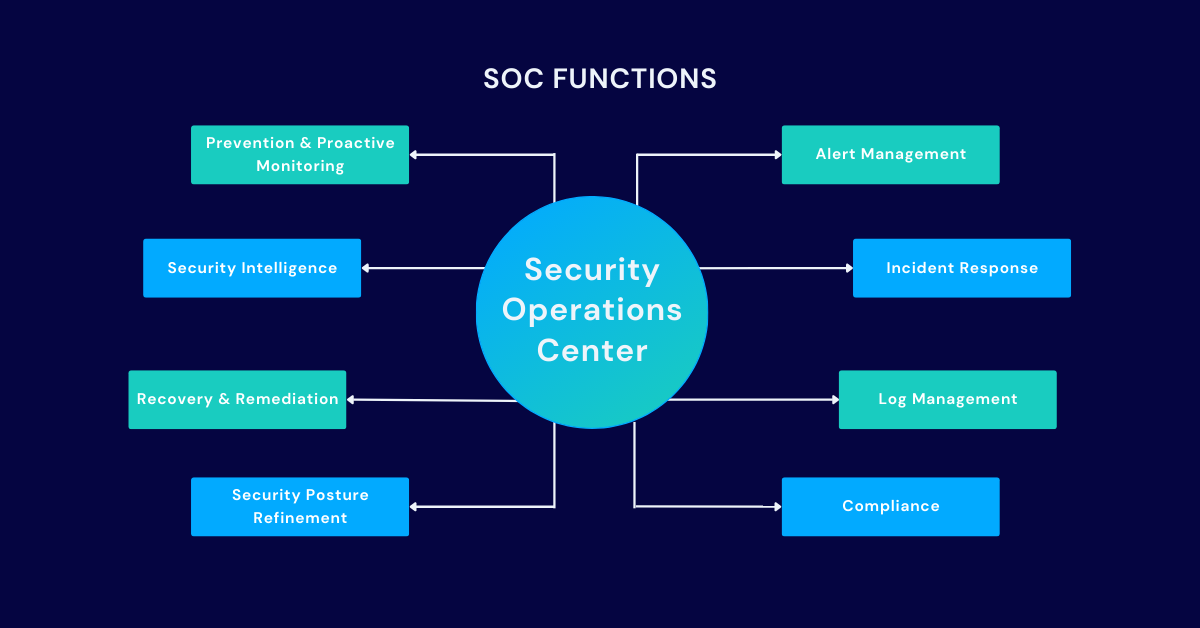
✔ A Cyber Security Operations Center (CSOC) is responsible for detecting, investigating, responding to, and mitigating cyber threats.
✔ CSOCs can be in-house, hybrid, or outsourced (MSSP/VSOC) depending on an organization’s needs.

🔹 Part 2 – SOC Roles & Responsibilities

✔ SOC teams are structured into L1, L2, and L3 analysts, SOC engineers, CTI analysts, and SOC managers.
SOC collaboration with Red Teams, Incident Response, and IT Operations is crucial.

🔹 Part 3 – Essential SOC Tools & Technologies

✔ SOCs rely on SIEM, EDR/XDR, SOAR, IDS/IPS, Threat Intelligence Platforms, DFIR, and ASM tools.
Automation (SOAR) and AI-driven detection (UEBA, ML-based analytics) are becoming standard.

🔹 Part 4 – SOC Processes & Workflows

✔ The SOC workflow follows a cycle: Detection → Investigation → Response → Threat Hunting → Continuous Monitoring.
✔ SOC efficiency depends on playbooks, automation, and proactive security strategies.

🔹 Part 5 – Building an Effective SOC: Best Practices & Challenges

Common SOC challenges include alert fatigue, false positives, talent shortages, and evolving attack techniques.
✔ Implement SOAR automation, CTI integration, and AI-driven threat detection to improve efficiency.

🔹 Part 6 – Advanced Threat Detection Techniques

✔ Move beyond signature-based detection by integrating MITRE ATT&CK mapping, behavioral analytics, and AI-driven security.
✔ Threat hunting and real-time IoC correlation improve detection accuracy.

🔹 Part 7 – Incident Response Case Studies & Lessons Learned

✔ Real-world case studies of ransomware, insider threats, supply chain attacks, and phishing highlight the importance of rapid response & remediation.
Best practices: Enable MFA, enforce least privilege, conduct regular threat hunting, and automate containment.

🔹 Part 8 – SOC Metrics & KPIs

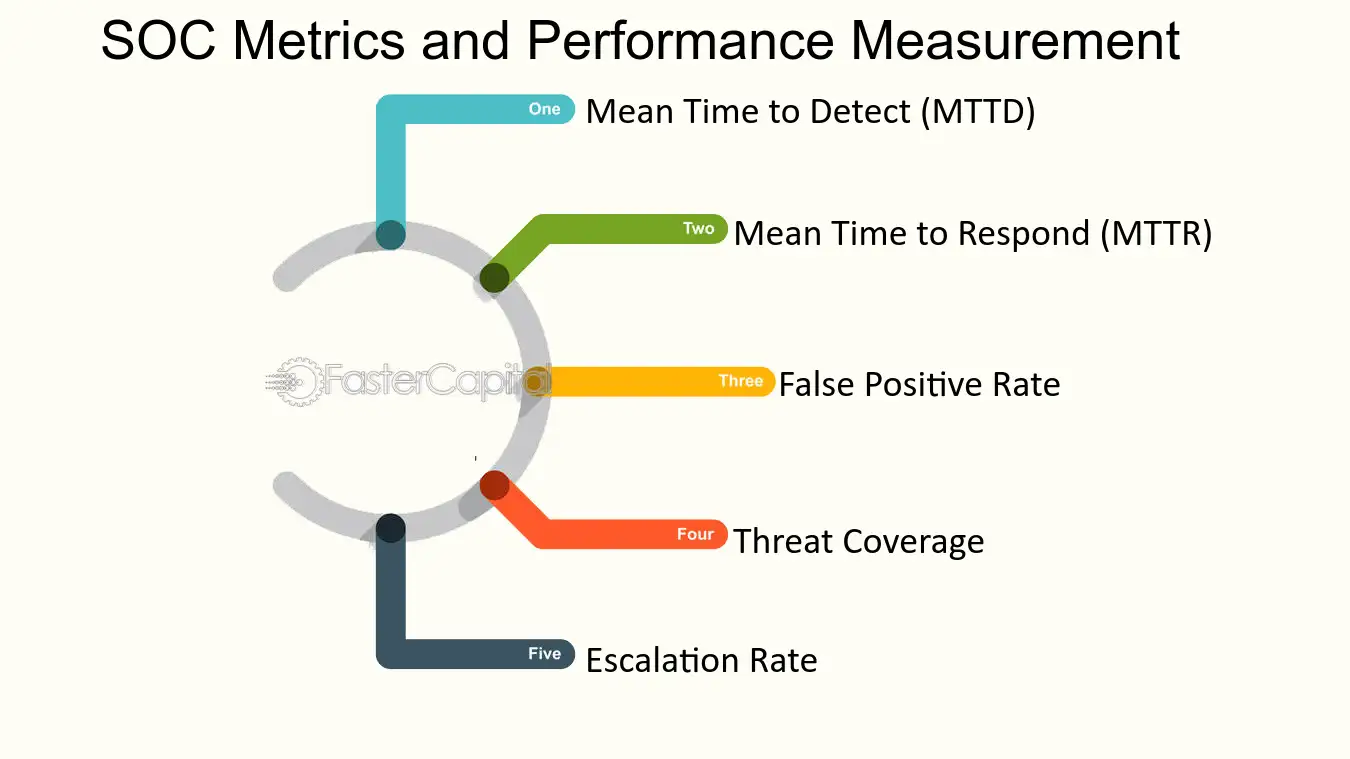
✔ SOC performance is measured using MTTD, MTTR, false positive rate, threat hunting effectiveness, and automation efficiency.
SOC leaders should track KPIs to improve security maturity and operational efficiency.

🔹 Part 9 – SOC Maturity Models

✔ SOCs evolve from reactive (Level 1) to proactive (Level 5) intelligence-driven security operations.
✔ Mature SOCs integrate SOAR, CTI, AI-based detection, and adversary simulation (Red Teaming).

🔹 Part 10 – Next-Gen SOC (iSOC) & Future Trends

✔ The Next-Gen SOC (iSOC) is powered by AI, XDR, predictive analytics, deception technology, and automation.
✔ Future SOCs will incorporate Zero Trust, Quantum-Safe Security, and Threat Hunting-as-a-Service (THaaS).


2. Action Plan: How to Build or Improve a SOC

If you're building or optimizing a SOC, here’s a step-by-step roadmap:

📌 Phase 1: Establish Core SOC Operations (0-6 Months)

✅ Deploy SIEM & Log Management to centralize security monitoring.
✅ Implement 24/7 SOC Monitoring with L1/L2 analysts.
✅ Develop Incident Response Playbooks for ransomware, phishing, insider threats, and cloud security incidents.
✅ Ensure basic security tools: EDR, IDS/IPS, vulnerability management.

📌 Phase 2: Enhance Threat Detection & Response (6-12 Months)

✅ Integrate SOAR automation to reduce manual alert triage.
✅ Establish Threat Intelligence (TI) feeds and IoC correlation.
✅ Improve SIEM rule tuning to minimize false positives.
✅ Conduct Red Team/Blue Team exercises to validate detection capabilities.

📌 Phase 3: Move to a Proactive & Intelligence-Driven SOC (12-24 Months)

✅ Deploy Extended Detection & Response (XDR) for cross-platform analytics.
✅ Build a dedicated Threat Hunting Team using MITRE ATT&CK-based methodologies.
✅ Implement behavioral analytics (UEBA) for insider threat detection.
✅ Establish Deception Technology (honeypots, honey tokens) to detect lateral movement.

📌 Phase 4: Transition to a Fully Automated & AI-Powered SOC (24+ Months)

✅ Integrate AI-driven threat detection & predictive security analytics.
✅ Implement Zero Trust SOC architecture.
✅ Expand SOC visibility to multi-cloud environments.
✅ Move towards Security Fusion Centers, unifying SOC, CTI, and Red Team operations.


3. SOC Transformation Checklist

Do we have 24/7 security monitoring?
Is our SIEM tuned to reduce false positives?
Do we integrate threat intelligence (CTI) for proactive security?
Are we automating response with SOAR?
Are we conducting regular Red Team & adversary simulations?
Have we adopted XDR, AI, or behavioral analytics for detection?
Is our SOC evolving towards a Zero Trust model?


4. Final Thoughts

Building a modern SOC is a continuous journey, requiring:
🔹 A skilled security team
🔹 Advanced detection & response tools
🔹 AI-driven automation & intelligence-led security
🔹 Continuous improvement through Red Teaming & Threat Hunting

🎯 The future of SOCs is not just detection & response—it’s predictive security that prevents attacks before they happen.

🚀 Now it’s your turn! What’s your next step in SOC transformation? Do you need templates, frameworks, or more guidance? Let’s discuss! 😊

CSOC 101 - Part 10: Building a Next-Generation SOC (iSOC) – Future Trends & Innovations


In Part 9, we explored SOC maturity models and how organizations evolve from reactive security operations to a fully intelligence-driven SOC. Now, in Part 10, we’ll discuss how to build a Next-Generation SOC (iSOC) and the future trends shaping security operations.


1. What is a Next-Generation SOC (iSOC)?

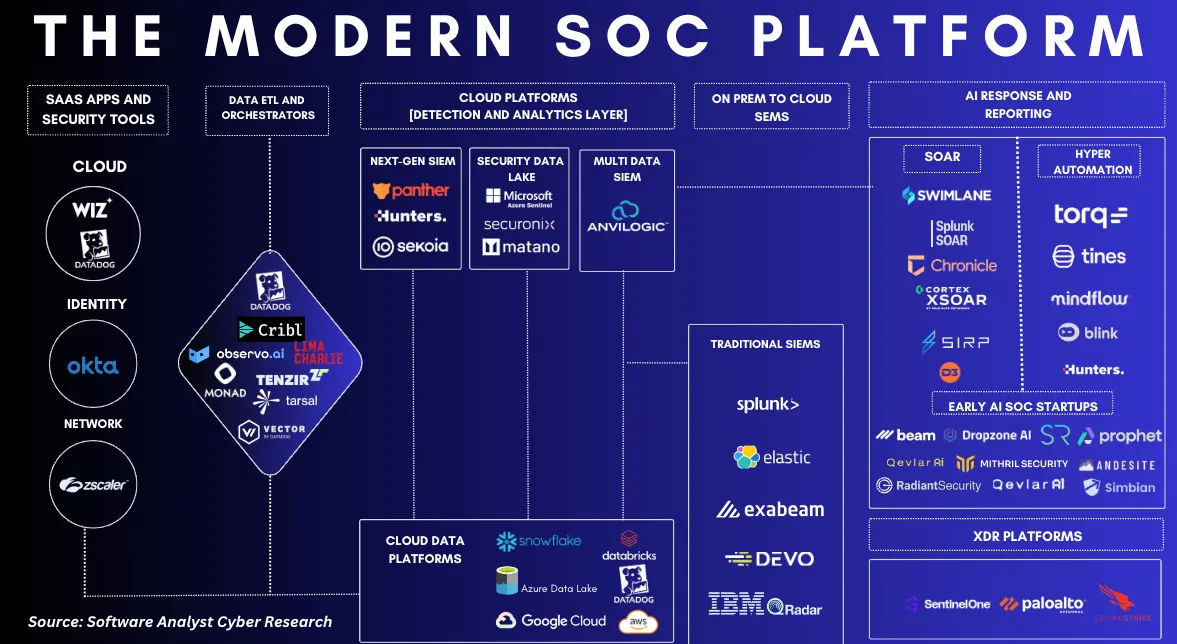
A Next-Generation SOC (iSOC) goes beyond traditional threat detection and response by integrating AI, automation, extended detection, and predictive analytics.

🔹 Traditional SOC – Relies on manual investigations, SIEM, and rule-based alerts.
🔹 Next-Gen SOC (iSOC) – Uses AI-driven analytics, proactive hunting, deception technology, and automated response.

📌 Key Characteristics of iSOC:
AI & ML-Powered Threat Detection – Uses machine learning to detect zero-day attacks.
Extended Detection & Response (XDR) – Provides cross-platform threat correlation.
Cyber Threat Intelligence (CTI) Integration – Maps adversary tactics in real time.
Deception Technology – Uses honeypots, honeytokens, and decoy systems.
Predictive Security Analytics – Identifies attacks before they happen.
Cloud-Native Security – Monitors SaaS, hybrid cloud, and multi-cloud environments.

📌 Why Build a Next-Gen SOC?
Traditional SOCs struggle with alert overload, advanced threats, and evolving attack techniques. An iSOC enhances efficiency, accuracy, and automation to stay ahead of modern cyber threats.


2. Key Technologies in a Next-Gen SOC

To transform a traditional SOC into an iSOC, organizations must integrate emerging security technologies.

🔹 AI & Machine Learning for Threat Detection

✔ AI-driven User and Entity Behavior Analytics (UEBA) detects insider threats and anomalies.
✔ ML models predict attack patterns based on past incidents.
✔ AI automates triage, reducing false positives and alert fatigue.

📌 Tools:
🔹 Darktrace AI, Microsoft Defender AI, CrowdStrike Falcon AI


🔹 Extended Detection & Response (XDR)

✔ Correlates network, endpoint, email, and cloud telemetry to provide deeper attack visibility.
✔ Reduces dwell time by detecting lateral movement across environments.

📌 Tools:
🔹 Microsoft Defender XDR, Palo Alto Cortex XDR, CrowdStrike Falcon XDR


🔹 Cyber Threat Intelligence (CTI) Integration

✔ Uses real-time threat intelligence to map adversary tactics (MITRE ATT&CK).
✔ Automates IoC (Indicator of Compromise) correlation with SIEM & SOAR.

📌 Tools:
🔹 MISP, Recorded Future, AlienVault OTX, Anomali ThreatStream


🔹 SOAR & Security Automation

Automates repetitive SOC tasks (e.g., blocking malicious IPs, isolating endpoints).
✔ Reduces MTTR (Mean Time to Respond) by integrating automated playbooks.

📌 Tools:
🔹 Splunk SOAR (Phantom), Cortex XSOAR, IBM Resilient


🔹 Deception Technology & Honeypots

✔ Deploys decoy systems (honeypots, honeytokens, fake credentials) to lure attackers.
✔ Helps detect early-stage reconnaissance and supply chain attacks.

📌 Tools:
🔹 Canary Tokens, Thinkst Canary, Illusive Networks


🔹 Predictive Security Analytics

✔ Uses big data analytics & AI models to predict potential security incidents.
✔ Helps SOC teams prioritize high-risk alerts before an attack occurs.

📌 Tools:
🔹 Google Chronicle, AWS GuardDuty, Exabeam Security Analytics


3. Future Trends in SOC Operations

As cyber threats evolve, SOC operations must adopt new methodologies and frameworks.

🔹 AI-Driven SOC Automation

AI-powered SOAR & SIEM will dominate SOC operations, reducing manual workload.
⚡ AI-based SOC chatbots will assist analysts in investigations & triage.


🔹 Cloud-Native Security & Zero Trust SOC

⚡ SOCs must monitor multi-cloud, SaaS, and hybrid environments.
Zero Trust will be embedded into SOC workflows to enforce strict identity controls.

📌 Example: Google BeyondCorp, Microsoft Zero Trust Model


🔹 Threat Hunting-as-a-Service (THaaS)

⚡ Organizations will outsource proactive threat hunting to specialized threat intelligence firms.

📌 Example: CrowdStrike Falcon OverWatch, Palo Alto Unit 42


🔹 Quantum-Resistant Security Monitoring

⚡ As quantum computing advances, SOCs must monitor post-quantum cryptographic threats.
Quantum-Safe Cryptography will be integrated into SOC detection mechanisms.

📌 Example: NIST’s Post-Quantum Cryptography Project


4. Steps to Transition to a Next-Gen SOC

Organizations can gradually upgrade their SOC by following a structured roadmap.

🔹 Phase 1: Strengthen Core Security Operations

✅ Deploy SIEM, EDR, and Vulnerability Management.
✅ Automate incident response with SOAR.

🔹 Phase 2: Integrate Threat Intelligence & Advanced Detection

✅ Use Threat Intelligence Feeds (MISP, Recorded Future).
✅ Implement MITRE ATT&CK-based detection & analytics.

🔹 Phase 3: Deploy AI-Driven Security & Automation

✅ Implement AI-based behavioral analytics (UEBA).
✅ Use ML-driven anomaly detection for proactive threat hunting.

🔹 Phase 4: Adopt Predictive Security & Full SOC Automation

✅ Deploy XDR for cross-platform correlation.
✅ Integrate AI-driven SOAR playbooks.


5. Challenges in Implementing a Next-Gen SOC

📌 High Costs & Complexity – Advanced AI & automation tools require significant investment.
📌 Talent Shortage – Requires highly skilled SOC analysts & AI specialists.
📌 Data Overload – AI models must be fine-tuned to avoid alert fatigue & false positives.

Solution:
✔ Gradually implement iSOC components in phases.
✔ Invest in AI-driven SOAR & XDR automation.
✔ Partner with MSSPs for 24/7 managed SOC services.


Conclusion

The Next-Generation SOC (iSOC) is the future of cybersecurity operations, providing AI-powered automation, real-time threat intelligence, predictive analytics, and zero-trust enforcement.

Key Takeaways:

🚀 iSOC combines AI, XDR, SOAR, CTI, and Predictive Analytics to enhance SOC capabilities.
🚀 Organizations must gradually evolve from traditional SIEM-based SOCs to an AI-driven, automated model.
🚀 Future SOCs will integrate deception technology, quantum-safe security, and zero-trust frameworks.

CSOC 101 - Part 9: SOC Maturity Models – Evolving from Reactive to Proactive Security


In Part 8, we explored CSOC KPIs and metrics for measuring SOC performance. Now, in Part 9, we will discuss SOC maturity models—how organizations evolve from basic security monitoring to a highly advanced, proactive, and intelligence-driven CSOC.

1. Understanding SOC Maturity Levels

SOC maturity is measured based on capabilities, processes, automation, and threat detection effectiveness. Organizations typically progress through five levels of SOC maturity, from a basic reactive approach to a proactive, intelligence-driven SOC.

SOC Maturity Levels:

LevelSOC Maturity StageCharacteristicsCommon Challenges
Level 1Reactive SOC (Basic Monitoring)- Basic SIEM logging & alerting
  • No dedicated SOC team
  • Manual investigation & response | - High false positives
  • No incident response playbooks
  • Long response times | | Level 2 | Operational SOC (Improving Detection & Response) | - Dedicated SOC analysts
  • Use of SIEM, EDR, IDS/IPS
  • Basic incident response processes | - Lack of automation
  • Difficulty handling advanced attacks | | Level 3 | Advanced SOC (Automated & Threat Intelligence Driven) | - SOAR automation for response
  • Threat intelligence feeds integrated
  • Hunting for unknown threats | - Still dependent on manual threat hunting | | Level 4 | Proactive SOC (Threat Hunting & Adversary Simulation) | - Dedicated threat hunters
  • Active red teaming & adversary simulation
  • Behavioral analytics & ML-based detection | - Requires highly skilled analysts | | Level 5 | Intelligence-Driven SOC (Fully Mature & AI-Powered) | - Fully automated SOC with AI/ML
  • Predictive security & real-time response
  • Integrated Cyber Threat Intelligence (CTI) | - High costs & complexity |

2. How to Evolve from Reactive to Proactive SOC

Organizations must take structured steps to move from a reactive SOC to a fully mature, intelligence-driven SOC.

🔹 Level 1 → Level 2: From Reactive to Operational SOC

📌 Objective: Establish basic SOC functions with proper monitoring, logging, and analysis.

Deploy a SIEM (Security Information and Event Management) solution.
Hire a dedicated SOC team (L1 & L2 analysts) for 24/7 monitoring.
Develop Incident Response Playbooks to standardize investigation & response.
Implement Endpoint Detection & Response (EDR) to improve visibility.
Tune SIEM alerts to reduce false positives.

📌 Key Challenges:
🔴 Limited visibility across cloud and on-prem environments.
🔴 High alert fatigue due to excessive false positives.


🔹 Level 2 → Level 3: Advancing to an Automated SOC

📌 Objective: Improve incident detection and response efficiency with automation and threat intelligence.

Integrate SOAR (Security Orchestration, Automation, and Response) to reduce manual workload.
Deploy Threat Intelligence Platforms (TIPs) to correlate indicators of compromise (IoCs).
Automate repetitive security tasks (e.g., IP blocking, malware quarantine).
Implement proactive Threat Hunting based on MITRE ATT&CK techniques.
Develop a Vulnerability Management program to reduce exploitable risks.

📌 Key Challenges:
🔴 Requires automation expertise to configure SOAR playbooks.
🔴 False positives still occur without proper SIEM tuning.


🔹 Level 3 → Level 4: Becoming a Proactive SOC

📌 Objective: Move beyond detection & response by actively hunting for threats and simulating real-world attacks.

Establish a dedicated Threat Hunting Team to find hidden threats.
Conduct Red Team vs. Blue Team exercises to test detection capabilities.
Use Behavioral Analytics (UEBA) to detect anomalies.
Monitor cloud, SaaS, and remote endpoints to expand visibility.
Use deception techniques (e.g., honeypots, honey tokens) to lure attackers.

📌 Key Challenges:
🔴 Requires highly skilled SOC analysts trained in threat hunting.
🔴 Threat actors evolve rapidly, requiring continuous tuning of detection rules.


🔹 Level 4 → Level 5: Becoming an Intelligence-Driven SOC

📌 Objective: Use AI, ML, and predictive analytics to preemptively stop threats before they escalate.

Deploy AI-driven Threat Detection & Response (e.g., CrowdStrike Falcon AI, Darktrace).
Implement Predictive Security Analytics to detect anomalies before an attack occurs.
Integrate Cyber Threat Intelligence (CTI) into every SOC process.
Develop a Cyber Fusion Center to unify SOC, threat intelligence, red teaming, and incident response.
Adopt Extended Detection & Response (XDR) for cross-platform security analytics.

📌 Key Challenges:
🔴 High operational costs and technology complexity.
🔴 Requires continuous innovation to stay ahead of evolving threats.


3. SOC Maturity Assessment – How to Measure Your Progress

Organizations can use SOC Maturity Models like NIST CSF, MITRE ATT&CK, or SOC-CMM to assess their progress.

🔹 Key Questions to Assess SOC Maturity:

How quickly do we detect and respond to threats?
Do we proactively hunt for threats or only react to alerts?
How well do we integrate threat intelligence into detection?
Are we automating low-level tasks to focus on advanced threats?
Are we testing SOC effectiveness with Red Team exercises?

📊 SOC Maturity Scoring Example:

CapabilityLevel 1Level 2Level 3Level 4Level 5
Incident Detection🟢 Basic SIEM alerts🟢 Improved tuning🟢 Threat Intelligence Integration🟢 Threat Hunting🟢 AI & ML-Powered Detection
Response Time⏳ Slow⏳ Faster IR Playbooks🚀 Automated Response (SOAR)🚀 Red Team Testing🚀 Predictive Security
Threat Intelligence❌ None✅ Basic IoC Matching✅ TI Feeds Integrated✅ Adversary Tracking✅ Full CTI Fusion
Automation❌ Manual✅ Some SIEM Rules✅ SOAR Playbooks✅ AI-Driven Response✅ Fully Automated SOC

4. How to Transition to a High-Maturity SOC

Organizations must adopt a structured roadmap for improving SOC maturity:

📌 Short-Term Goals (0-6 Months):
✔ Implement SIEM & EDR monitoring.
✔ Build basic incident response workflows.

📌 Mid-Term Goals (6-12 Months):
✔ Deploy SOAR automation for faster response.
✔ Improve threat intelligence integration.

📌 Long-Term Goals (12+ Months):
✔ Implement proactive threat hunting.
✔ Develop a Cyber Fusion Center with CTI & Red Teaming.
✔ Adopt AI-driven detection & response solutions.


Conclusion

Evolving from a reactive SOC to an intelligence-driven SOC requires continuous improvements in automation, threat intelligence, and proactive security practices.

In Part 10, we will discuss "Building a Next-Generation SOC (iSOC) – Future Trends & Innovations." 🚀

CSOC 101 - Part 8: CSOC Metrics & KPIs – Measuring SOC Effectiveness


In Part 7, we examined real-world incident response case studies and key lessons learned. Now, in Part 8, we’ll focus on how to measure the effectiveness of a Cyber Security Operations Center (CSOC) using Key Performance Indicators (KPIs) and metrics.

An effective CSOC isn't just about detecting threats—it must also demonstrate efficiency, accuracy, and continuous improvement. Measuring the right KPIs helps organizations evaluate their SOC maturity, response capabilities, and overall security posture.


1. Why CSOC Metrics & KPIs Matter

KPIs help CSOC teams:
✅ Assess the efficiency of threat detection and response.
✅ Identify bottlenecks in security operations.
✅ Improve SOC processes and automation.
✅ Justify budget and resource allocation to leadership.

Without measurable KPIs, it’s difficult to determine whether the CSOC is improving or struggling.


2. Key CSOC Metrics & KPIs

CSOC performance is measured across different categories, including threat detection, response time, threat intelligence, and operational efficiency.

🔹 Detection & Monitoring Metrics

These metrics assess how well the CSOC detects and analyzes threats.

📌 Mean Time to Detect (MTTD)
Definition: The average time it takes for the CSOC to detect a security incident.
Formula:

MTTD=(Time of detectionTime of attack initiation)Total number of incidentsMTTD = \frac{\sum (Time\ of\ detection - Time\ of\ attack\ initiation)}{Total\ number\ of\ incidents}

Goal: Reduce MTTD by improving SIEM rules, EDR analytics, and threat hunting capabilities.

📌 False Positive Rate
Definition: The percentage of alerts that turn out to be false positives.
Formula:

False Positive Rate=(False PositivesTotal Alerts)×100False\ Positive\ Rate = \left(\frac{False\ Positives}{Total\ Alerts}\right) \times 100

Goal: Reduce false positives through better rule tuning and behavioral analytics.

📌 Alert Fatigue Index
Definition: Measures how many alerts analysts investigate daily.
Formula:

Alert Fatigue Index=Total Security AlertsTotal Security AnalystsAlert\ Fatigue\ Index = \frac{Total\ Security\ Alerts}{Total\ Security\ Analysts}

Goal: Reduce analyst fatigue through SOAR automation and AI-driven filtering.


🔹 Incident Response & Containment Metrics

These KPIs evaluate how fast and effectively the CSOC responds to incidents.

📌 Mean Time to Respond (MTTR)
Definition: The average time it takes to contain, mitigate, and resolve an incident.
Formula:

MTTR=(Time of resolutionTime of detection)Total number of incidentsMTTR = \frac{\sum (Time\ of\ resolution - Time\ of\ detection)}{Total\ number\ of\ incidents}

Goal: Reduce MTTR by improving incident response automation and SOAR integration.

📌 Containment Time
Definition: The time taken to isolate an infected system or stop an attack after detection.
Goal: Minimize containment time by deploying EDR auto-response actions (e.g., auto-isolation of compromised endpoints).

📌 Remediation Success Rate
Definition: The percentage of incidents fully remediated after containment.
Formula:

Remediation Success Rate=(Number of fully remediated incidentsTotal number of incidents)×100Remediation\ Success\ Rate = \left(\frac{Number\ of\ fully\ remediated\ incidents}{Total\ number\ of\ incidents}\right) \times 100

Goal: Maintain a high success rate by improving forensic analysis and recovery processes.


🔹 Threat Intelligence & Proactive Hunting Metrics

These metrics assess how well the CSOC anticipates and mitigates threats before they cause damage.

📌 Threat Hunting Effectiveness
Definition: Measures how many undetected threats were found during proactive threat hunting.
Formula:

Threat Hunting Effectiveness=(Total threats detected via threat huntingTotal threats detected)×100Threat\ Hunting\ Effectiveness = \left(\frac{Total\ threats\ detected\ via\ threat\ hunting}{Total\ threats\ detected}\right) \times 100

Goal: Increase effectiveness by improving hunting methodologies and intelligence integration.

📌 Threat Intelligence Utilization Rate
Definition: Measures how often IoCs and TI feeds contribute to real-world threat detection.
Formula:

Threat Intelligence Utilization=(Detections based on threat intelligenceTotal detections)×100Threat\ Intelligence\ Utilization = \left(\frac{Detections\ based\ on\ threat\ intelligence}{Total\ detections}\right) \times 100

Goal: Maximize TI integration with SIEM, EDR, and SOAR tools.

📌 Dwell Time
Definition: The time a threat actor remains undetected inside the network.
Formula:

Dwell Time=Time of containmentTime of initial compromiseDwell\ Time = Time\ of\ containment - Time\ of\ initial\ compromise

Goal: Reduce dwell time by enhancing threat hunting and real-time monitoring.


🔹 CSOC Operational Efficiency Metrics

These KPIs help measure the productivity and effectiveness of SOC analysts.

📌 Analyst Productivity Rate
Definition: Measures how many alerts/incidents an analyst handles per shift.
Formula:

Analyst Productivity=Total Alerts ProcessedTotal SOC AnalystsAnalyst\ Productivity = \frac{Total\ Alerts\ Processed}{Total\ SOC\ Analysts}

Goal: Maintain high efficiency without analyst burnout by leveraging automation.

📌 SOC Automation Efficiency
Definition: Measures how many incidents are resolved using automated playbooks (SOAR) instead of manual investigation.
Formula:

Automation Efficiency=(Incidents resolved via SOARTotal incidents)×100Automation\ Efficiency = \left(\frac{Incidents\ resolved\ via\ SOAR}{Total\ incidents}\right) \times 100

Goal: Increase automation to free up analysts for higher-value tasks (e.g., threat hunting).

📌 SOC Maturity Level
Definition: Assesses how advanced the CSOC is based on frameworks like NIST, MITRE ATT&CK, and SOC-CMM.
Goal: Move from reactive SOC (Level 1) to a proactive SOC (Level 3+) through continuous improvement.


3. How to Improve CSOC Performance Using Metrics

🔹 Optimize SIEM & SOAR Automation – Reduce alert fatigue and MTTR.
🔹 Enhance Threat Intelligence Integration – Improve detection accuracy using real-time TI feeds.
🔹 Train Analysts & Automate Low-Level Tasks – Focus SOC resources on advanced investigations.
🔹 Conduct Regular SOC Maturity Assessments – Improve processes based on KPI insights.
🔹 Test Incident Response with Red Team Exercises – Validate detection and response capabilities.


Conclusion

Measuring CSOC performance using the right KPIs and metrics ensures continuous improvement in threat detection, response, and operational efficiency.

In Part 9, we’ll cover "SOC Maturity Models & How to Evolve from Reactive to Proactive Security", explaining how organizations can level up their SOC capabilities.