Monday, March 3, 2025

CSOC 101 - Part 4: CSOC Processes & Workflows


In Part 3, we covered the essential tools and technologies that power a Cyber Security Operations Center (CSOC). Now, in Part 4, we will dive into CSOC processes and workflows, which are crucial for maintaining an effective and efficient security operation.

1. Core CSOC Processes

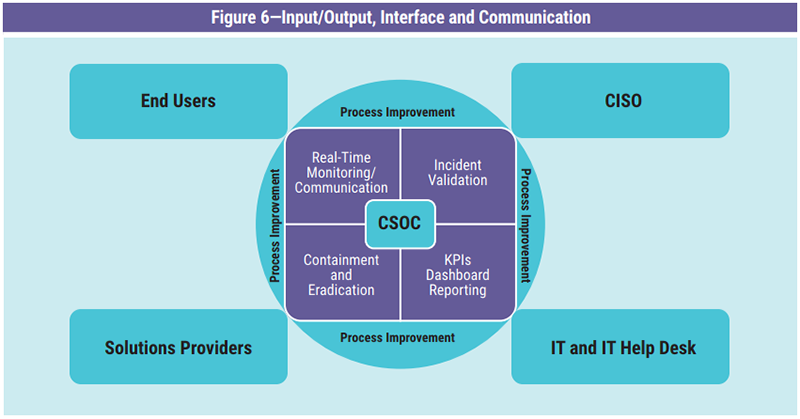
A well-functioning CSOC follows structured processes and workflows to handle security incidents, monitor threats, and continuously improve its security posture. These processes include:

1️⃣ Incident Detection & Triage
2️⃣ Incident Investigation & Analysis
3️⃣ Incident Response & Mitigation
4️⃣ Threat Hunting
5️⃣ Continuous Security Monitoring
6️⃣ Post-Incident Review & Improvement

Let’s explore each process in detail.


2. Incident Detection & Triage

🔹 Objective:

Quickly detect potential security threats and prioritize them based on severity.

🔹 Workflow:

Log Collection & Correlation – The SIEM continuously collects logs from network devices, endpoints, cloud environments, and security tools.
Alert Generation – Detection rules trigger alerts based on suspicious activity (e.g., failed login attempts, privilege escalations).
Triage & Prioritization – Tier 1 (L1) analysts review alerts and classify them as false positives, low-risk, or high-risk threats.
Escalation – If an alert requires further investigation, it is escalated to L2 analysts for deep analysis.

🔹 Key Questions for Analysts:

🔹 Is this a false positive or a real threat?
🔹 What system or user is affected?
🔹 How urgent is the threat?
🔹 Should this be escalated to L2/L3 for further investigation?


3. Incident Investigation & Analysis

🔹 Objective:

Determine the root cause, attack vector, and impact of a detected security event.

🔹 Workflow:

Log Analysis – L2 analysts review logs from SIEM, EDR, firewalls, and cloud platforms to understand the attack pattern.
Forensic Investigation – If needed, memory and disk analysis tools (e.g., Volatility, Autopsy) are used to examine compromised systems.
Threat Intelligence Correlation – Analysts compare attack indicators (IoCs) with known threat actor TTPs.
Containment Decision – If the attack is ongoing, isolate the affected system to prevent further compromise.

🔹 Key Questions for Analysts:

🔹 How did the attacker gain access?
🔹 What actions did the attacker perform?
🔹 Are other systems compromised?
🔹 Is this part of a larger attack campaign?


4. Incident Response & Mitigation

🔹 Objective:

Contain and eliminate the threat while minimizing business disruption.

🔹 Workflow:

Containment Actions – Block malicious IP addresses, domains, or user accounts in firewalls and endpoint security tools.
Eradication & Recovery – Remove malware, reset credentials, and restore affected systems from backups.
Patch & Secure – Apply security updates, close misconfigured ports, and improve security controls.
Report & Document – Generate an Incident Report for stakeholders and compliance purposes.

🔹 Key Questions for Analysts:

🔹 Have we completely removed the threat?
🔹 Can we recover systems without reintroducing risk?
🔹 What preventive actions should be taken to avoid a recurrence?


5. Threat Hunting

🔹 Objective:

Proactively search for undetected threats inside the network before they cause damage.

🔹 Workflow:

Hypothesis-Driven Hunting – Analysts form hypotheses based on MITRE ATT&CK techniques (e.g., "Are attackers using PowerShell-based persistence?").
Data Analysis – Hunt for suspicious behavior in SIEM logs, EDR telemetry, and network traffic.
IoC Matching – Compare findings with known malware hashes, domains, and IPs from threat intelligence feeds.
Attack Simulation – Red teaming or adversary emulation is conducted to validate detection capabilities.

🔹 Key Questions for Threat Hunters:

🔹 Are there any undetected threats lurking in the network?
🔹 How can we improve detection for sophisticated attacks?
🔹 Are we seeing early indicators of an Advanced Persistent Threat (APT)?


6. Continuous Security Monitoring

🔹 Objective:

Ensure real-time visibility into security events and detect threats before they escalate.

🔹 Workflow:

24/7 Alert Monitoring – SOC analysts continuously monitor SIEM dashboards and EDR alerts.
Anomaly Detection – Machine learning and behavioral analytics detect suspicious deviations from normal activity.
Log Enrichment – Security logs are enriched with threat intelligence to improve detection accuracy.
Cloud & Endpoint Monitoring – Visibility is expanded to remote endpoints, SaaS applications, and multi-cloud environments.

🔹 Key Monitoring Metrics:

📊 Mean Time to Detect (MTTD) – How fast can threats be identified?
📊 Mean Time to Respond (MTTR) – How quickly can we contain an incident?
📊 False Positive Rate – Are analysts wasting time on unnecessary alerts?


7. Post-Incident Review & Improvement

🔹 Objective:

Learn from past incidents to improve SOC efficiency and security posture.

🔹 Workflow:

Incident Debrief – Analysts conduct a post-mortem review to identify gaps in detection and response.
Detection Rule Updates – SIEM correlation rules and EDR policies are fine-tuned to prevent similar attacks.
Playbook Enhancements – SOAR automation workflows are improved to accelerate incident handling.
Red Team TestingSimulated attacks (e.g., phishing, ransomware) are conducted to test SOC preparedness.

🔹 Key Questions for Post-Incident Review:

🔹 What worked well during the incident response?
🔹 What could have been done faster?
🔹 Do we need new detection rules, alerts, or automation?


Conclusion

A structured SOC workflow ensures efficient threat detection, investigation, response, and continuous improvement. Here’s a summary of CSOC processes:

🚀 Incident Detection & Triage → 🔎 Investigation & Analysis → 🛡 Incident Response & Mitigation → 🎯 Threat Hunting → 📡 Continuous Monitoring → 🔄 Post-Incident Improvement

In Part 5, we will discuss "Building an Effective CSOC: Best Practices and Challenges." Stay tuned! 🚀

Would you like any refinements before we move to Part 5? 😊

CSOC 101 - Part 3: Essential Tools & Technologies in a CSOC


In Part 2, we covered the roles and responsibilities within a Cyber Security Operations Center (CSOC). Now, let's dive into the essential tools and technologies that power a modern SOC.

A CSOC cannot function effectively without the right tools to detect, investigate, and respond to cyber threats. Below are the key categories of security tools every SOC should have.


1. Security Information and Event Management (SIEM)

🔹 What is SIEM?

SIEM (Security Information and Event Management) is a core component of any SOC. It collects, normalizes, correlates, and analyzes security logs from various sources to detect threats.

🔹 Key Functions:

Log Collection & Correlation – Aggregates logs from firewalls, servers, endpoints, and cloud environments.
Threat Detection & Alerts – Uses detection rules and correlation logic to identify suspicious activity.
Forensic Investigation – Helps analysts investigate incidents with historical log searches.
Compliance Reporting – Generates reports for regulatory frameworks like ISO 27001, NIST, and PCI-DSS.

🔹 Popular SIEM Solutions:

Splunk – Powerful log analysis and security intelligence platform.
Microsoft Sentinel – Cloud-native SIEM with built-in AI and integration with Microsoft security tools.
IBM QRadar – AI-powered threat detection and security intelligence.
Elastic Security (ELK Stack) – Open-source SIEM alternative for real-time analytics.


2. Endpoint Detection & Response (EDR/XDR)

🔹 What is EDR/XDR?

EDR (Endpoint Detection & Response) and XDR (Extended Detection & Response) provide real-time monitoring and response capabilities for endpoints (servers, workstations, and mobile devices).

🔹 Key Functions:

Behavior-based Threat Detection – Detects abnormal activities like privilege escalation, persistence, or data exfiltration.
Incident Containment & Response – Enables analysts to isolate infected systems, terminate processes, and remove threats remotely.
Threat Hunting Capabilities – Allows proactive searches for Indicators of Compromise (IoCs) on endpoints.
Automated Remediation – Uses machine learning to mitigate threats autonomously.

🔹 Popular EDR/XDR Solutions:

CrowdStrike Falcon – AI-driven EDR with strong threat hunting features.
Microsoft Defender for Endpoint – Integrated with Microsoft security ecosystem.
SentinelOne – Autonomous EDR with real-time response capabilities.
Trend Micro XDR – Cross-platform detection and response.


3. Threat Intelligence Platform (TIP)

🔹 What is TIP?

Threat Intelligence Platforms (TIPs) aggregate and analyze threat intelligence feeds to enhance SOC detection and response.

🔹 Key Functions:

Threat Actor Profiling – Tracks APT groups, ransomware gangs, and emerging threats.
IOC Management – Collects Indicators of Compromise (IP addresses, hashes, domains) for better threat detection.
Automated Threat Intelligence Sharing – Integrates with SIEM, EDR, and SOAR for real-time intelligence-driven security.

🔹 Popular Threat Intelligence Platforms:

MISP (Malware Information Sharing Platform) – Open-source threat intelligence sharing platform.
Recorded Future – AI-powered threat intelligence platform.
VirusTotal Intelligence – Malware and threat analysis with multiple antivirus engine results.
AlienVault OTX – Community-driven threat intelligence sharing.


4. Security Orchestration, Automation & Response (SOAR)

🔹 What is SOAR?

SOAR (Security Orchestration, Automation, and Response) automates repetitive security tasks and streamlines incident response processes.

🔹 Key Functions:

Automated Playbooks – Executes predefined actions for incident response (e.g., blocking IPs, isolating infected endpoints).
Case Management – Centralized workflow for tracking security incidents.
Integration with SIEM & EDR – Enhances threat detection and remediation capabilities.

🔹 Popular SOAR Solutions:

Palo Alto Cortex XSOAR – Advanced automation and incident management.
Splunk SOAR (formerly Phantom) – Integrates with Splunk SIEM for security automation.
IBM Resilient – Incident response and case management platform.


5. Intrusion Detection and Prevention Systems (IDS/IPS)

🔹 What is IDS/IPS?

IDS (Intrusion Detection System) and IPS (Intrusion Prevention System) detect and block malicious network activity.

🔹 Key Functions:

Signature & Behavior-Based Detection – Identifies known attack patterns and anomalies.
Real-Time Threat Prevention – Blocks malicious traffic and prevents unauthorized access.
Network Visibility – Provides deep packet inspection and network security insights.

🔹 Popular IDS/IPS Solutions:

Suricata – Open-source IDS/IPS with high-performance threat detection.
Snort – Open-source network intrusion prevention system.
Palo Alto NGFW – Next-gen firewall with integrated IPS functionality.
Cisco Firepower – Enterprise-grade IDS/IPS for advanced threat prevention.


6. Vulnerability Management Tools

🔹 What is Vulnerability Management?

Vulnerability management tools identify, assess, and prioritize security weaknesses in an organization's infrastructure.

🔹 Key Functions:

Asset Discovery & Scanning – Identifies vulnerable systems, applications, and services.
Risk-Based Prioritization – Ranks vulnerabilities based on severity and exploitability.
Automated Patch Management – Recommends or automates security patching.

🔹 Popular Vulnerability Management Solutions:

Tenable Nessus – Comprehensive vulnerability scanning solution.
Qualys VMDR – Cloud-based vulnerability and risk management.
Rapid7 InsightVM – Continuous vulnerability monitoring and remediation.


7. Digital Forensics and Incident Response (DFIR) Tools

🔹 What is DFIR?

DFIR tools help security teams analyze compromised systems, investigate cyber incidents, and collect forensic evidence.

🔹 Key Functions:

Memory & Disk Forensics – Analyzes malware infections and attacker persistence techniques.
Log Analysis & Timeline Reconstruction – Tracks attacker movements across compromised systems.
Malware Analysis – Reverse-engineers suspicious files to understand their behavior.

🔹 Popular DFIR Solutions:

Autopsy – Open-source digital forensics platform.
Volatility – Memory forensics framework for analyzing RAM dumps.
The Sleuth Kit – Forensic toolset for file system analysis.
FTK (Forensic Toolkit) – Commercial forensic investigation software.


8. Attack Surface Management (ASM) Tools

🔹 What is ASM?

Attack Surface Management (ASM) tools continuously monitor an organization’s exposed assets on the internet.

🔹 Key Functions:

Asset Discovery & Monitoring – Identifies publicly exposed services, cloud assets, and misconfigurations.
Risk Assessment – Highlights potential attack vectors for adversaries.
Integration with Threat Intelligence – Maps attack surfaces to real-world threats.

🔹 Popular ASM Solutions:

Shodan – Internet-wide scanner for exposed assets.
Censys – Attack surface discovery and monitoring.
BinaryEdge – Scans internet-facing services for security risks.
Recon-ng – Open-source reconnaissance framework.


Conclusion

A well-equipped CSOC needs a combination of SIEM, EDR, TIP, SOAR, IDS/IPS, vulnerability management, DFIR, and ASM tools to detect and respond to threats effectively.

In Part 4, we will explore CSOC Processes & Workflows, including Incident Handling, Threat Hunting, and Continuous Monitoring strategies. Stay tuned! 🚀

Would you like any specific focus or additional details before I move to Part 4? 😊

CSOC 101 - Part 2: CSOC Roles and Responsibilities

In Part 1, we introduced the Cyber Security Operations Center (CSOC) and its importance in modern cybersecurity. Now, let's dive deeper into the key roles and responsibilities that make a CSOC function effectively.


1. Understanding the CSOC Team Structure

A well-functioning CSOC typically has multiple tiers of security analysts, engineers, and managers. The structure may vary depending on the organization’s size, budget, and security maturity level, but the common hierarchy includes:

🔹 Tier 1 – Security Analyst (L1) – Monitoring & Triage

  • Continuously monitors alerts from SIEM, EDR, IDS/IPS, and other security tools.
  • Performs initial triage to filter false positives and escalate potential threats.
  • Follows predefined Standard Operating Procedures (SOPs) for incident response.

🔹 Tier 2 – Security Analyst (L2) – Incident Investigation & Response

  • Investigates and analyzes security incidents escalated by L1 analysts.
  • Conducts log analysis, forensic investigation, and malware analysis to determine the root cause.
  • Recommends and implements mitigation actions to contain threats.

🔹 Tier 3 – Threat Hunter / Security Expert (L3) – Advanced Threat Hunting

  • Proactively hunts for hidden threats within the environment.
  • Develops custom detection rules, threat intelligence use cases, and security automation.
  • Assists in complex incident response and forensic investigations.

🔹 CSOC Manager / Lead

  • Oversees the entire CSOC operations.
  • Manages incident response coordination, reporting, and compliance with cybersecurity frameworks.
  • Ensures continuous improvement and optimization of SOC processes.

🔹 CSOC Engineer / SIEM Engineer

  • Manages and maintains security tools (SIEM, SOAR, EDR, IDS/IPS, etc.).
  • Develops and fine-tunes detection rules, log ingestion, and automation workflows.
  • Ensures that the CSOC has the right visibility across the organization’s infrastructure.

🔹 Cyber Threat Intelligence (CTI) Analyst

  • Collects, analyzes, and shares threat intelligence to enhance detection and response capabilities.
  • Tracks threat actors, TTPs (Tactics, Techniques, and Procedures), and IoCs (Indicators of Compromise).
  • Works closely with SOC analysts and engineers to integrate intelligence-driven security operations.

🔹 Forensic & Incident Response (DFIR) Specialist

  • Conducts digital forensic investigations on compromised systems.
  • Responds to advanced cyber threats like ransomware, APTs, and insider threats.
  • Works with legal and compliance teams to ensure proper evidence handling.

🔹 Compliance & Risk Analyst

  • Ensures the CSOC meets regulatory requirements (ISO 27001, NIST, PCI-DSS, etc.).
  • Assesses risk management and security posture improvements.
  • Works with auditors and management to enforce security policies.

2. Key Responsibilities of a CSOC Team

A CSOC is responsible for detecting, analyzing, responding to, and mitigating security threats. Some of the core tasks include:

24/7 Monitoring & Threat Detection – Using SIEM, EDR, IDS/IPS, and ASM tools to detect potential security threats.
Incident Triage & Investigation – Reviewing alerts, analyzing attack patterns, and identifying root causes.
Threat Hunting – Proactively searching for hidden threats that traditional security tools may miss.
Incident Response & Mitigation – Containing, eradicating, and recovering from cyber incidents.
Threat Intelligence Integration – Leveraging CTI to improve detection and response effectiveness.
Security Automation & Orchestration – Using SOAR to automate repetitive tasks and improve SOC efficiency.
Continuous Improvement & Training – Refining security processes, updating detection rules, and conducting regular red/blue team exercises.


3. Why CSOC Roles & Responsibilities Matter

Without a well-defined SOC team structure and responsibilities, security operations become ineffective, leading to:
⚠ Increased dwell time of attackers in the environment.
⚠ High false-positive alerts overwhelming analysts.
⚠ Poor response times to critical security incidents.
⚠ Compliance and regulatory failures.

A strong CSOC team with clear roles and responsibilities is essential for rapid threat detection and effective incident response, ultimately reducing business risks.


What’s Next?

Now that we understand the roles in a CSOC, in Part 3, we’ll explore the essential tools & technologies that power a modern Security Operations Center. Stay tuned! 🚀

Would you like any refinements or additions before we move to Part 3? 😊

CSOC 101 - Part 1: Introduction to Cyber Security Operations Center (CSOC)


What is a CSOC?

A Cyber Security Operations Center (CSOC) is a centralized unit responsible for monitoring, detecting, analyzing, and responding to cybersecurity incidents in an organization. CSOCs act as the frontline defense against cyber threats, ensuring continuous protection of an organization’s digital assets.

Why is a CSOC Important?

Organizations today face an increasing number of cyber threats, including malware, phishing, ransomware, insider threats, and advanced persistent threats (APTs). A well-structured CSOC helps in:

  • Real-time Threat Monitoring: 24/7 monitoring of security events and alerts.
  • Incident Detection and Response: Rapid identification and mitigation of security incidents.
  • Threat Intelligence Utilization: Gathering and analyzing threat intelligence to predict and prevent attacks.
  • Regulatory Compliance: Ensuring compliance with industry security standards such as ISO 27001, NIST, and GDPR.
  • Reducing Business Risks: Protecting sensitive data and ensuring business continuity.

Key Functions of a CSOC

A CSOC performs various security operations to safeguard an organization’s infrastructure. These include:

  1. Continuous Security Monitoring – Uses SIEM (Security Information and Event Management) and other tools to collect and analyze security logs.
  2. Incident Response – Investigates alerts, contains threats, and remediates security incidents.
  3. Threat Hunting – Proactively searches for hidden threats that may have bypassed traditional security controls.
  4. Digital Forensics – Analyzes cyber incidents to determine the root cause and extent of a security breach.
  5. Vulnerability Management – Identifies and mitigates vulnerabilities before they can be exploited by attackers.
  6. Security Awareness Training – Educates employees on best cybersecurity practices to reduce the risk of human errors leading to security breaches.
  7. Security Engineering & Automation – Implements automation to enhance security efficiency and reduce manual workload.

CSOC vs. NOC: What’s the Difference?

A Network Operations Center (NOC) and a CSOC may seem similar, but their functions are different:

Feature CSOC NOC
Primary Focus Security threats & incidents Network performance & uptime
Key Activities Threat monitoring, detection, incident response Network troubleshooting, maintenance
Tools Used SIEM, EDR, IDS/IPS, Threat Intelligence Network monitoring tools, traffic analyzers
Goal Ensure security and data integrity Ensure network stability and performance

Building Blocks of a CSOC

To establish an effective CSOC, organizations need to consider the following components:

1. People

  • SOC Analysts (L1, L2, L3) – Handle different levels of security analysis and incident response.
  • Threat Hunters – Proactively search for threats.
  • SOC Manager – Leads and manages SOC operations.
  • Security Engineers – Develop and maintain security tools and automation.

2. Processes

  • Incident Response Procedures (IRP)
  • Security Event Handling Playbooks
  • Threat Intelligence Integration Processes
  • Compliance and Reporting Frameworks

3. Technology

  • SIEM (Security Information and Event Management) – Centralized log management and analysis.
  • EDR/XDR (Endpoint Detection & Response/Extended Detection & Response) – Endpoint security monitoring.
  • IDS/IPS (Intrusion Detection/Prevention Systems) – Detect and prevent network intrusions.
  • SOAR (Security Orchestration, Automation, and Response) – Automates incident response workflows.
  • Threat Intelligence Platforms – Aggregates and analyzes threat data.

Conclusion

A CSOC is an essential component of an organization's cybersecurity strategy. It provides continuous security monitoring, rapid threat response, and proactive defense measures. In the upcoming parts of the CSOC 101 series, we will dive deeper into different aspects of CSOC operations, including roles and responsibilities, tools and technologies, incident response frameworks, and real-world case studies.

Stay tuned for CSOC 101 - Part 2: Roles and Responsibilities in a CSOC!

Exploit 101: Final Part - Mastering Exploit Development and Beyond


As we conclude our Exploit 101 series, this final part will summarize key takeaways and introduce advanced topics for those looking to master exploit development. Whether you aim to become a penetration tester, security researcher, or vulnerability analyst, this guide will help you take the next step.

Recap of Exploit 101 Series

Core Concepts Covered:

  1. Introduction to Exploits and Vulnerabilities – Understanding how exploits work.
  2. Setting Up an Exploitation Lab – Creating a safe testing environment.
  3. Basic Exploit Development – Learning memory corruption techniques.
  4. Return-Oriented Programming (ROP) – Bypassing security mitigations.
  5. Heap Exploitation Basics – Manipulating heap memory structures.
  6. Advanced Heap Exploitation – Bypassing modern heap protections.
  7. Kernel Exploitation Basics – Privilege escalation via kernel vulnerabilities.
  8. Kernel Rootkits and Persistence – Gaining stealthy, long-term access.
  9. Windows Exploitation Basics – Targeting Windows memory corruption flaws.
  10. Advanced Windows Exploitation – Bypassing ASLR, DEP, and modern security mechanisms.

Each of these topics provides a foundation for more advanced security research.


Advanced Exploit Development Topics

For those looking to push their skills further, here are some advanced areas of exploit development:

1. Fuzzing for Vulnerability Discovery

  • AFL (American Fuzzy Lop): Automated bug discovery.
    afl-fuzz -i input -o output -- ./vulnerable_binary @@
    
  • WinAFL: Windows-based fuzzing tool.
  • LibFuzzer: In-memory fuzzing for libraries.

2. Advanced Return-Oriented Programming (ROP) and JIT Spraying

  • Chaining ROP gadgets dynamically.
  • Bypassing CFG (Control Flow Guard) using JIT Spraying.

3. Linux Kernel Exploitation (Advanced)

  • Kernel Heap Overflow: Exploiting memory corruption in kernel space.
  • Bypassing KASLR and SMEP: Using race conditions and info leaks.
  • Writing kernel-mode payloads: Injecting rootkits stealthily.

4. Windows Kernel Exploitation (Advanced)

  • Exploiting Driver Vulnerabilities: Attacking signed drivers.
  • Token Stealing via Kernel Mode: Elevating privileges stealthily.
  • PatchGuard and Hyper-V Bypasses: Defeating modern Windows protections.

5. Firmware and IoT Exploitation

  • Reverse Engineering Embedded Devices: Extracting firmware from hardware.
  • Exploiting Bootloaders: Gaining persistence at firmware level.
  • JTAG/UART Debugging: Interacting with device internals.

6. Web Exploitation and Deserialization Attacks

  • Remote Code Execution (RCE) via Serialization Bugs: Exploiting Python, Java, and PHP object deserialization flaws.
  • WebAssembly Exploits: Attacking browser JIT engines.
  • Server-Side Template Injection (SSTI): Abusing web frameworks.

How to Continue Your Learning Journey

1. Practical Labs & Challenges

  • Hack The Box (HTB) – Real-world exploitation challenges.
  • TryHackMe – Beginner to advanced cyber labs.
  • VulnHub – Downloadable vulnerable machines.

2. Books for Exploit Development

  • The Shellcoder's Handbook – Chris Anley, et al.
  • The Art of Exploitation – Jon Erickson.
  • Windows Internals – Mark Russinovich.
  • The Art of Memory Forensics – Michael Hale Ligh.

3. Certifications for Exploit Developers

  • Offensive Security Certified Expert (OSEE) – The ultimate Windows exploit dev certification.
  • Exploit Development Student (EDS) by eLearnSecurity – Beginner-friendly exploit research training.
  • Red Team Operator (RTO) by Zero-Point Security – Hands-on red teaming and exploit use.

Final Thoughts

Exploit development is a constantly evolving field that requires a deep understanding of systems, memory, and mitigations. The best way to improve is to practice, analyze real-world CVEs, and contribute to security research.

What's Next?

  • Develop your own exploits and share research.
  • Report security vulnerabilities via responsible disclosure.
  • Collaborate with security communities and open-source projects.

Thank you for following the Exploit 101 series! Keep hacking, keep learning, and push the limits of cybersecurity research. 🚀

Exploit 101: Part 10 - Advanced Windows Exploitation


In this tenth and final part of our Exploit 101 series, we will explore Advanced Windows Exploitation Techniques, including bypassing security mitigations, crafting advanced exploits, and achieving persistence in compromised systems.

Advanced Windows Exploitation Techniques

To exploit modern Windows systems, attackers must bypass security defenses like DEP, ASLR, PatchGuard, and Control Flow Guard (CFG). Below are some techniques used for advanced exploitation.

1. Bypassing Data Execution Prevention (DEP)

DEP prevents execution of non-executable memory, blocking traditional buffer overflow shellcode execution.

Bypassing DEP with ROP (Return-Oriented Programming)

ROP allows an attacker to chain existing functions in memory to execute arbitrary code.

Steps:
  1. Find ROP Gadgets in a loaded DLL (e.g., kernel32.dll):
    ROPgadget --binary vulnerable.exe
    
  2. Create an ROP chain to call VirtualProtect() and mark memory as executable:
    payload = b"A" * offset  # Overflow buffer
    payload += p32(virtual_protect)  # Address of VirtualProtect()
    payload += p32(gadget_ret)  # Return address
    payload += p32(shellcode_address)  # Address of shellcode
    
  3. Execute the payload, bypassing DEP.

2. Bypassing ASLR (Address Space Layout Randomization)

ASLR randomizes memory addresses to make exploitation harder.

Bypassing ASLR with Memory Leaks

  1. Find a function that leaks memory addresses (e.g., printf() or NtQuerySystemInformation).
  2. Use the leaked address to calculate DLL base addresses.
  3. Construct a new exploit using the known addresses.

Example of leaking an address in C:

printf("Address of kernel32.dll: %p\n", GetModuleHandle("kernel32.dll"));

3. Token Stealing for Privilege Escalation

Even without a kernel exploit, attackers can steal access tokens to escalate privileges.

Exploiting SeImpersonatePrivilege

  1. Check if the current user has impersonation privileges:
    whoami /priv | findstr SeImpersonatePrivilege
    
  2. Use RoguePotato or PrintSpoofer to escalate privileges:
    PrintSpoofer64.exe -i -c cmd.exe
    
  3. Confirm SYSTEM access:
    whoami
    

4. Exploiting Windows Kernel for SYSTEM Privileges

Exploiting kernel vulnerabilities allows attackers to execute arbitrary code in ring 0.

Exploiting a Windows Kernel Null Pointer Dereference

  1. Find a vulnerable driver that maps a NULL pointer in kernel space.
  2. Use user-controlled memory to overwrite kernel structures.
  3. Execute a payload to spawn a SYSTEM shell.

Example of triggering a kernel crash:

#include <windows.h>
int main() {
    *(int *)0 = 0xDEADBEEF; // NULL pointer dereference
    return 0;
}

5. Persistence Techniques

After exploitation, attackers establish persistence to maintain access:

  • Registry Autoruns:
    reg add HKCU\Software\Microsoft\Windows\CurrentVersion\Run /v backdoor /t REG_SZ /d "C:\malicious.exe"
    
  • Scheduled Task Execution:
    schtasks /create /tn "Update" /tr C:\backdoor.exe /sc onlogon /ru SYSTEM
    
  • DLL Hijacking:
    • Replace a legitimate DLL with a malicious one in the application’s directory.

Windows Exploitation Mitigations

Microsoft implements multiple defenses:

  1. Windows Defender Exploit Guard (WDEG) – Protects against memory corruption.
  2. Control Flow Guard (CFG) – Blocks control hijacking attempts.
  3. Credential Guard – Prevents credential dumping.
  4. LSA Protection – Protects sensitive authentication components.

How Attackers Bypass Mitigations

  • Memory Corruption Exploits – Exploiting unpatched vulnerabilities.
  • Privilege Escalation via Kernel Exploits – Bypassing PatchGuard.
  • Code Injection – Injecting malicious code into trusted processes.
  • APC Hijacking – Manipulating asynchronous procedure calls to execute malicious code.

Conclusion

Advanced Windows exploitation requires deep knowledge of ROP, ASLR bypass, privilege escalation, and kernel exploitation. This concludes our Exploit 101 series. Continue your journey by exploring real-world CVEs, exploit research, and penetration testing techniques.

Further Learning Resources

  • Windows Internals, Part 1 & 2 – By Mark Russinovich
  • The Art of Memory Forensics – By Michael Hale Ligh
  • Offensive Security Exploitation Expert (OSEE) – Advanced exploit development course
  • Hack The Box / VulnHub – Practice with real-world challenges

What’s Next?

  • Learn Advanced Exploit Development (Windows/Linux).
  • Explore Firmware and IoT Exploitation.
  • Get into Reverse Engineering & Malware Analysis.

Thank you for following the Exploit 101 series! Keep practicing, researching, and pushing your skills further. 🚀